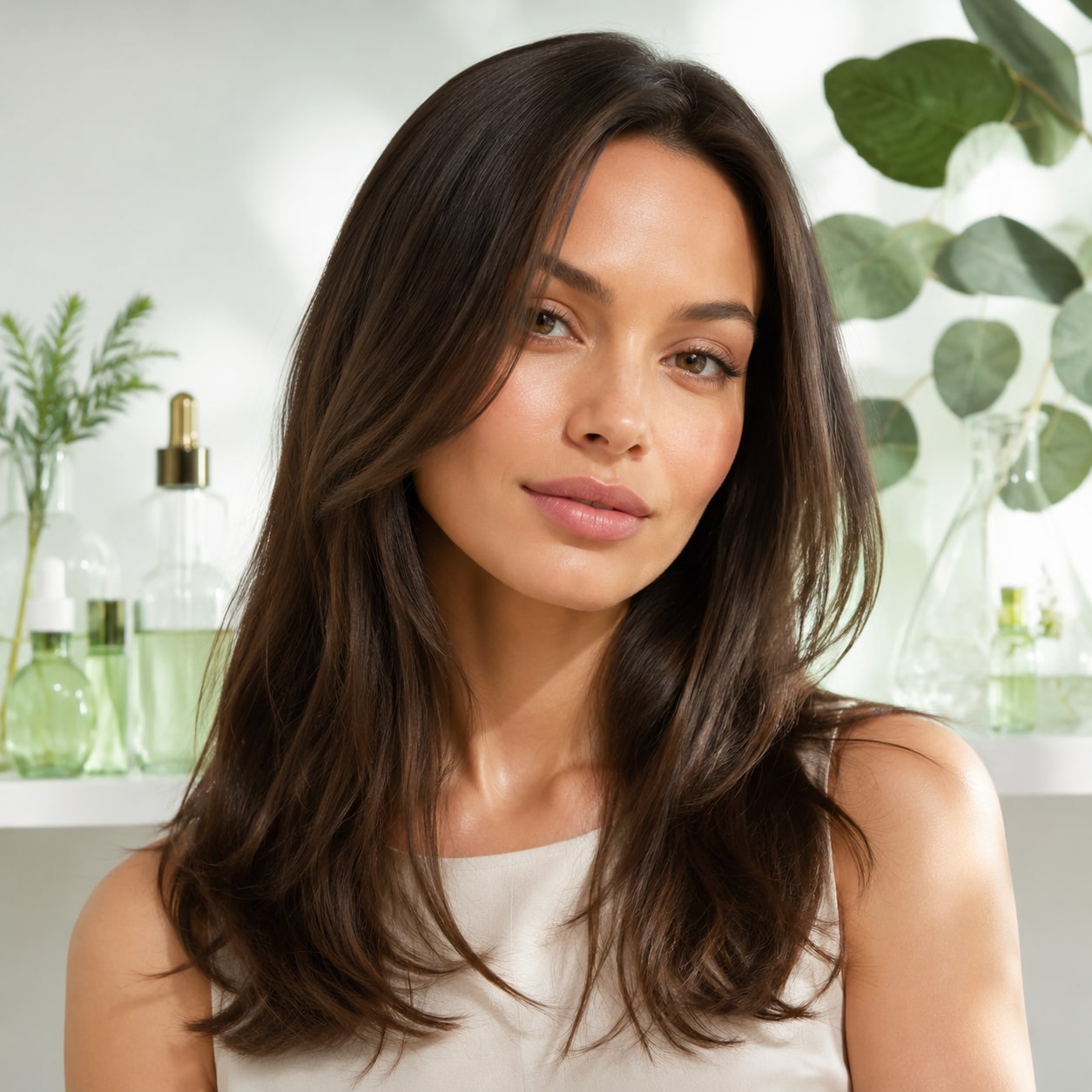
Fine Hair Frizz
Fine Hair Frizz — Flyaways, Static & Poof
Why fine strands frizz as flyaways and volume you did not ask for—and how to seal cuticles without collapse.
Frizzy Hair
Fine Hair Frizz · Updated July 2026
Tame short-strand halo and static flyaways at the crown without greasing roots or flattening volume.
Frizz happens when individual strands lift away from the bulk of your hair—and flyaways at the crown and temples are the most visible fine-hair version of that mechanism. Short hairs, lifted cuticle edges, and static charge combine to create a fuzzy ring that catches light and ruins an otherwise smooth style.
You are not necessarily dealing with all-over dryness. You are often fighting localized surface disruption on your lightest, shortest strands.
Flyaways cluster at the crown and hairline because:
Run fingers along flyaways: smooth tips suggest new growth; rough or split tips suggest damage frizz.
Micro-serum method — Emulsify half a pump between palms, glide over flyaways only—not full head.
Damp smoothing — Lightly mist crown with water or leave-in spray, press down with palms, air dry one minute.
Toothbrush and hairspray — Light hold on clean toothbrush, brush flyaways flat; use sparingly to avoid crunch.
Boar bristle on dry hair — Only if not staticky; otherwise increases flyaways.
Avoid heavy oil at roots—it separates fine strands into greasy wisps.
Full sequence: wash day frizz control.
Cotton pillow friction creates morning halo. Switch to silk pillowcase or overnight frizz protection routines.
Loose braid or silk cap contains short layers without tight tension.
Winter: Static dominates—humidify bedroom, use leave-in mist. Winter frizz.
Summer: Humidity swell at crown—light serum under humidity fine hair strategy.
If flyaways increase after coloring or daily flat ironing, read chemical damage and heat styling. Trims remove non-recoverable broken lengths.
Crown flyaways are lifted short or broken strands plus static on fine hair—not a call for root oil. Smooth locally with micro-dose products, reduce overnight friction, prevent new breakage, and match seasonal humidity or dryness strategies from the appropriate silo.
Frizz control improves when you treat each wash cycle as a controlled experiment rather than a new product hunt. Hold technique, timing, and dose constant for at least three cycles while changing only one variable—gel amount, dry method, or overnight protection. Note weather, indoor humidity if known, and how hair looked at four hours and end of day. Patterns emerge faster than switching bottles weekly.
Working routines show reduced styling time, fewer mid-day touch-ups, and frizz that stays localized (ends only) rather than global puff. If frizz shrinks but returns at the same time daily, check environmental triggers—commute humidity, gym showers, or office HVAC—before blaming product failure.
Persistent breakage, patchy hair loss, or sudden texture change after chemical service needs stylist or dermatologist input—not more anti-frizz serum. Trims every eight to twelve weeks remain part of maintenance even when routines stabilize; split ends cannot be sealed permanently at home.
Document hair at the same time of day under similar indoor lighting weekly. Compare photos before changing products again. Frizz improvement is often incremental—half-point reduction in daily touch-ups counts as success. Share notes with stylist so trims and chemical services align with your frizz cause profile.
Social media often recommends single-product miracles without cause context. If a creator has fine 2A hair, their humidity routine may fail on 3B high-porosity hair. Borrow techniques, not exact products, unless cause and texture match yours closely.
Both can cause halo hairs. New growth is healthy but short; breakage feels rough and often follows heat or tight styles. Examine ends of flyaways for splits.
Brushing dry fine hair builds static and lifts cuticles. Use ionic brush sparingly or smooth with damp hands and micro-dose serum instead.
Light-hold hairspray on a toothbrush applied to flyaways can tame them temporarily. It does not replace cuticle conditioning long term.
Yes. Reduced overnight friction means fewer morning wisps. See our silk pillowcase guide for setup tips.
Weekly frizz fixes — no spam.
Why fine strands frizz as flyaways and volume you did not ask for—and how to seal cuticles without collapse.
Stop fine hair from poofing in humid weather without weighing strands down. Cuticle sealing for delicate textures.

When lack of moisture—not humidity—drives frizz, static, and brittle texture. Your guide to dryness-driven frizz.